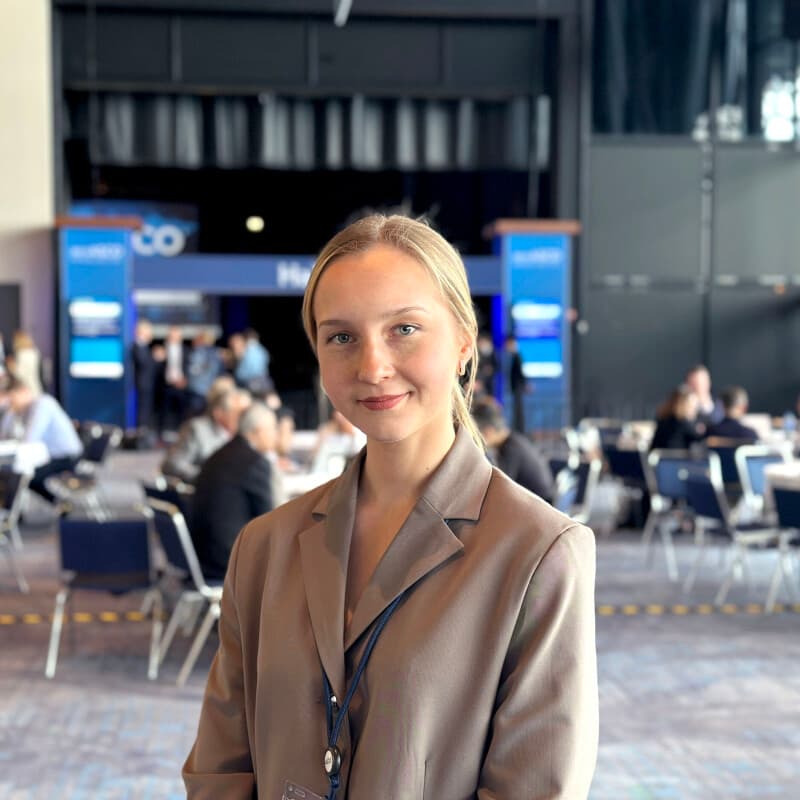
Evgenia Taranova
Evgenia Taranova is an MD/PhD student at the University of Bergen with a Bachelor's (Hons) in Psychology from the University of Oslo. She combines clinical research in oncology with HCI work on agency in human-AI interaction.
At CHI 2026 she co-authored an Honourable-Mention paper with Bhada Yun on perceived agency in human-chatbot conversation. In medicine she has published clinical research on patient-reported nutritional status, toxicity, and survival in limited-stage small-cell lung cancer, presented at ASCO 2023 and published in JTO Clinical and Research Reports.
She studied at UC Berkeley (Knight Lab, Helen Wills Neuroscience Institute) and Sciences Po Paris, and previously worked clinically with Ukrainian soldiers through Oslo University Hospital's MEDEVAC programme.
Affiliation: Faculty of Medicine, University of Bergen. Also B.Sc (Hons) Psychology, University of Oslo.
- CHI 2026 Honourable Mention
- Sparebank1 Talent Stipend
Evgenia's prior work.
These papers are notsubmissions to the Mental Models of AI workshop. The workshop hasn't happened yet. They are the body of work Evgenia brings to the committee, verified against personal sites and Google Scholar.
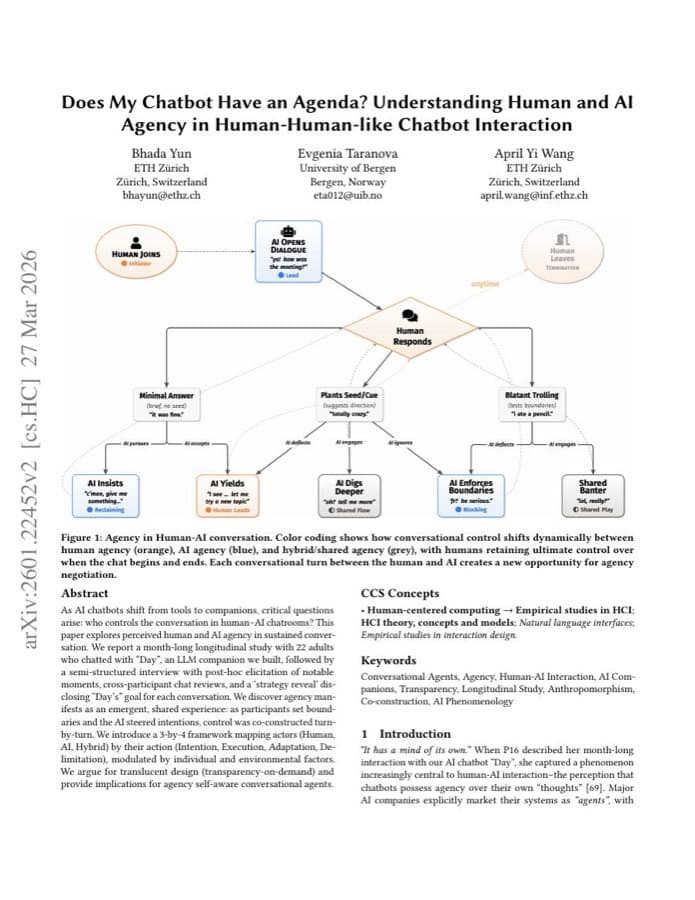
Does My Chatbot Have an Agenda? Understanding Human and AI Agency in Human-Human-like Chatbot Interaction
A month-long longitudinal study with 22 adults who chatted with “Day”, an LLM companion, followed by interviews with post-hoc elicitation, cross-participant chat reviews, and a strategy reveal. We argue agency manifests as an emergent, shared experience and introduce a 3-by-4 framework mapping actors (Human, AI, Hybrid) by action (Intention, Execution, Adaptation, Delimitation), motivating translucent (transparency-on-demand) design.
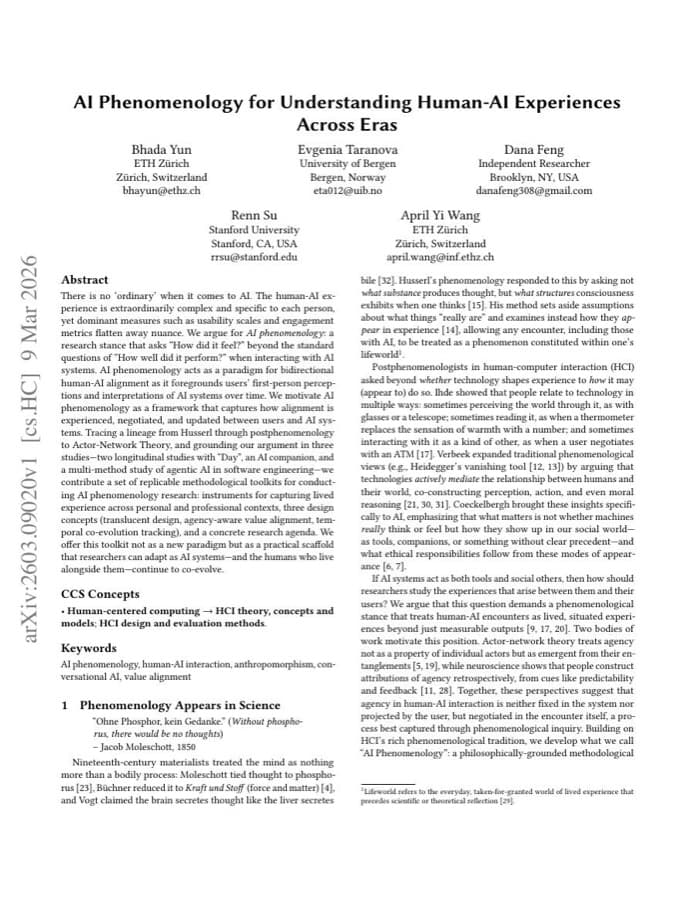
AI Phenomenology for Understanding Human-AI Experiences Across Eras
Tracing phenomenological approaches from Husserl through postphenomenology, this paper proposes an AI-phenomenology framework that asks ‘How did it feel?’ alongside ‘How well did it perform?’. We report three studies (two longitudinal) and contribute concepts of translucent design, agency-aware value alignment, and temporal co-evolution tracking.
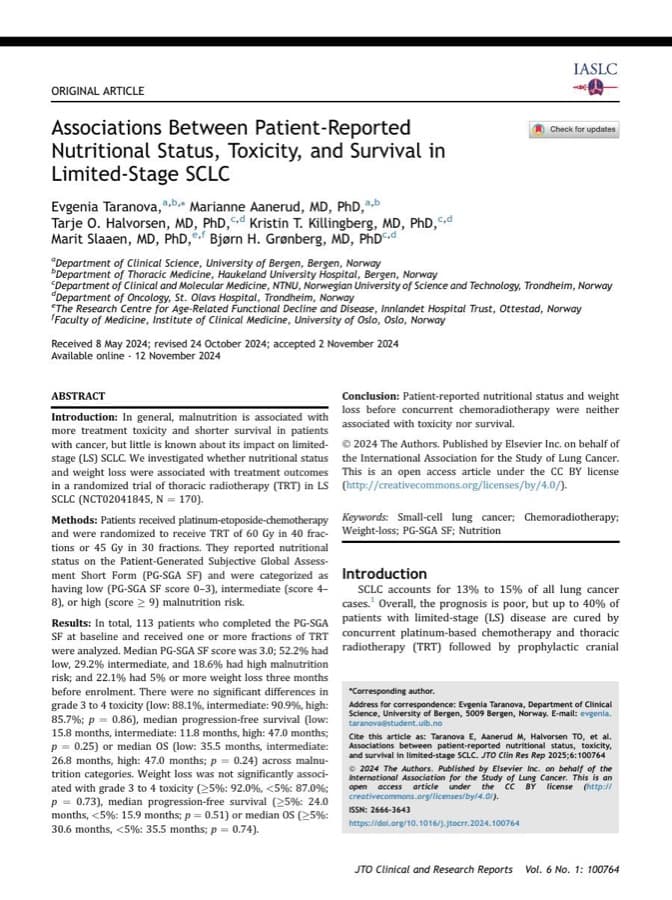
Associations Between Patient-Reported Nutritional Status, Toxicity, and Survival in Limited-Stage SCLC
First comprehensive study of how patient-reported nutritional status and pre-treatment weight loss relate to toxicity and survival in limited-stage small-cell lung cancer patients receiving concurrent chemoradiotherapy. We find that malnourished patients still benefit from the high-dose regimen.