Mental Models of A.I.
Mental Models of AI in the Interface: how design shapes what users believe their AI does, and how to evaluate that.
- Where
- 🇫🇮 Helsinki, Finland
- When
- February 2027 (exact date TBA)
- Co-located with
- ACM IUI 2027 ↗
Important Dates
- 01Workshop call open (IUI side)· doneJul 2026
- 02Workshop proposal deadline· doneAug 20, 2026
- 03Workshop acceptance notificationSep 2026
- 04Position-paper call releasedOct 2026
- 05Position-paper deadline· upcomingDec 11, 2026 (AoE)
- 06Notification of acceptanceJan 8, 2027 (AoE)
- 07Camera-ready deadlineJan 22, 2027 (AoE)
- 08Workshop at ACM IUI 2027, HelsinkiFebruary 2027
About this workshop
Every intelligent user interface presents a complex AI system through a finite set of design choices. What is surfaced, what is hidden, what is suggested, what is confirmed, what is explained. Each choice shapes the user's mental model of the system, and that model in turn shapes the next interaction. This workshop is about that feedback.
We convene IUI researchers, designers, and evaluators around three questions. First, how do specific interface affordances form, calibrate, or distort users' mental models of AI? Second, how do we measure mental-model fidelity in interactive use, not only in lab studies? Third, what does the IUI 2026 systematic review of mental-model methodologies in human-AI interaction (Sanchez, Vereschak & Deroy, 2026) imply for evaluating the next generation of intelligent interfaces?
We aim to produce three things: a curated method inventory for interface-level evaluation, design guidelines that link mental-model fidelity to interface effectiveness, and a co-authored research-agenda document for IUI-style mental-model research.
For IUI researchers, and the fields that share their problem.
The primary audience is researchers and practitioners building intelligent user interfaces who care about how, and how well, users model the systems they interact with. The committee spans HCI, ML, cognitive science, design, NLP, and applied domains. We welcome submissions from any discipline whose work touches the interface side of mental-model formation.
If you build interactive systems and you have ever asked “does the user actually understand what the model is doing?”, this workshop is for you.
Intelligent UIs and interaction design
Interface affordances, transparency cues, agentic workflows, interactive disambiguation.
Mental models and phenomenology of HAI
Longitudinal companion-AI studies, agency in chatbot interaction, AI phenomenology.
Methods for studying mental models
Empirical methodologies, machine teaching, how human agency shapes ML understanding.
Multisensory and medical interaction design
Sonic interaction design, AR and VR for surgery, cognitive-load measurement in interactive systems.
Affective and sensing-rich UIs
Sensing, perception, and multimodal emotion in interactive systems.
AI literacy and group-collaboration UIs
Generative-AI agents for collaborative learning and consensus-building.
We're actively inviting
★ submit if any of these is you- HCI and interaction design
Interface evaluation, transparency cues, novel UI affordances for AI.
- Cognitive psychology
Empirical foundations of model-based reasoning and metacognition.
- ML and NLP with interactive evaluation
Researchers building human-in-the-loop evaluation protocols for LMs and agents.
- Design research
Drawings, sonifications, and other non-textual probes of mental models.
- AI evaluation and auditing
Connecting interface evaluation with model auditing and accountability work.
Not on this list? Send us your work anyway. The point of the workshop is to find the disciplines we missed.
Workshop Themes
We invite contributions to one or more of the following themes. Each theme has a set of motivating research questions; submissions can engage any subset, propose a new one, or critique the framing itself.
- Theme 01
Interface Affordances and Mental-Model Formation
Which design choices reliably form, calibrate, or distort users' mental models of AI behaviour?
Research questions- 01Which UI affordances (explanations, confidence cues, scope indicators, examples-on-demand) actually move users' mental models in the intended direction?
- 02When does an interface produce productive friction that supports model-building, vs. cognitive overhead that doesn't?
- 03How do disclosure choices (model name, training cutoff, system-prompt visibility) shape user beliefs about capability and limits?
- 04What design patterns transfer across system classes such as recommenders, chatbots, agents, and copilots?
Keywords- interface affordances
- explainability
- transparency cues
- calibration
- translucent design
- design patterns
- Theme 02
Mental Models of LLMs, Agents, and Agentic Workflows
How do users reason about non-deterministic, tool-using interfaces whose capabilities shift between sessions?
Research questions- 01How do users form mental models of LLM-backed UIs across short, medium, and long horizons of use?
- 02How does anthropomorphism in conversational and agentic UIs support, or distort, accurate understanding?
- 03How do users reason about agency, intent, and limits when an interface delegates to autonomous tool-use?
- 04What system-prompt and policy disclosures help users build calibrated mental models of agentic systems?
Keywords- LLMs
- agents
- anthropomorphism
- system prompts
- agentic UIs
- agency
- Theme 03
Measuring Mental-Model Fidelity in Interactive Use
How do we evaluate users' mental models in real interactive settings, not just in lab probes?
Research questions- 01Which elicitation methods (think-aloud, drawings, scenario probes, C³M, behavioural traces) work in deployed interfaces?
- 02How do we capture mental-model evolution longitudinally without prohibitive participant burden?
- 03What does mental-model fidelity look like as an interface metric, and how does it correlate with task and trust outcomes?
- 04How can interface telemetry (clicks, dwell, undo, edit-distance to AI suggestions) be read as evidence of mental-model state?
Keywords- think-aloud
- drawings
- scenario probes
- behavioural traces
- interaction telemetry
- longitudinal evaluation
- Theme 04
Implications for IUI Design and Evaluation
What does mental-model research mean for how we design, evaluate, and ship intelligent interfaces?
Research questions- 01What design guidelines can we extract from mental-model research for IUI practitioners?
- 02How should standard IUI evaluation protocols be revised to surface mental-model fidelity?
- 03What does this imply for IUI-shipping organisations: onboarding, documentation, calibration interfaces?
- 04How do mental-model design patterns interact with accountability and auditing requirements?
Keywords- UX for AI
- design guidelines
- evaluation protocols
- calibration UIs
- accountability artefacts
What to Submit
- 01 · component
Position paper
Up to 4 pages (excluding references) in the ACM Master Article Template (single-column "sigconf" style). Contributions can take the form of empirical studies, methodological notes, design-pattern catalogues, theoretical positions, or critical reflections.
- 02 · component
Mental-model elicitation snapshot
A one-page, free-form artefact (a drawing, diagram, or short prose) capturing your own mental model of the AI system or class of systems your paper addresses. Used during the workshop's hands-on group exercise.
- 03 · component
Personal statement
A short (≤ 150 words) statement per attending author describing their stake in the workshop and what they hope to contribute or take away.
How to Submit
- Page limit
- 4 pages plus unlimited references
- Template
- ACM Master Article Template, sigconf style (single column) · template ↗
- Review
- Single-blind review by the organizing committee. Acceptance is based on fit with the themes, clarity, and discussion potential.
- Submission portal
- OpenReview portal. Link will appear here once the workshop is accepted.
- Questions
- workshop@mentalmodelsof.ai
Workshop Format
Full-day (about 7 hours) in-person workshop with a hybrid option for one breakout block.
We aim for 25 to 35 participants. Small enough that every accepted paper is presented and discussed, large enough to support cross-disciplinary breakouts.
- 09:00 to 09:30Welcome, introductions, mental-model warm-up exercise
- 09:30 to 10:30Primer talks from the organizing committee (HCI, ML, medicine, education)
- 10:30 to 12:30Position-paper short presentations, clustered by theme
- 12:30 to 13:30Lunch
- 13:30 to 15:30Cross-disciplinary breakout groups: method translation and worked examples
- 15:30 to 16:30Group pitches and live synthesis on shared boards
- 16:30 to 17:00Road-map document: live co-authoring of next steps
What Happens After Acceptance
- 01Accepted submissions will be published on this workshop page (paper plus elicitation snapshot).
- 02Organizers will thematically cluster authors into breakout groups of 4 to 6 ahead of the workshop.
- 03Each participant will be asked to read their group's papers and snapshots before the workshop.
- 04Selected contributions will be invited into a follow-up journal article on mental-model methods for IUI.
Organizers
The workshop is organized by an interdisciplinary committee spanning HCI, machine learning, cognitive science, education, and medicine. Click any organizer for full bio, profile links, and publication list.
 Téo SanchezPostdoctoral ResearcherLMU Munich · MI³
MSCA Fellow investigating how human agency shapes machine-learning understanding, and how communities of practice form around AI.
 Prerna RaviPhD CandidateMIT CSAIL
Designs generative-AI agents that augment group collaboration in education, creative practice, and collective decision-making.
- BYBhada YunMaster's Student → ResearcherETH Zürich
Studies how AI modulates human behaviour through longitudinal companion-chatbot studies and a phenomenological lens.
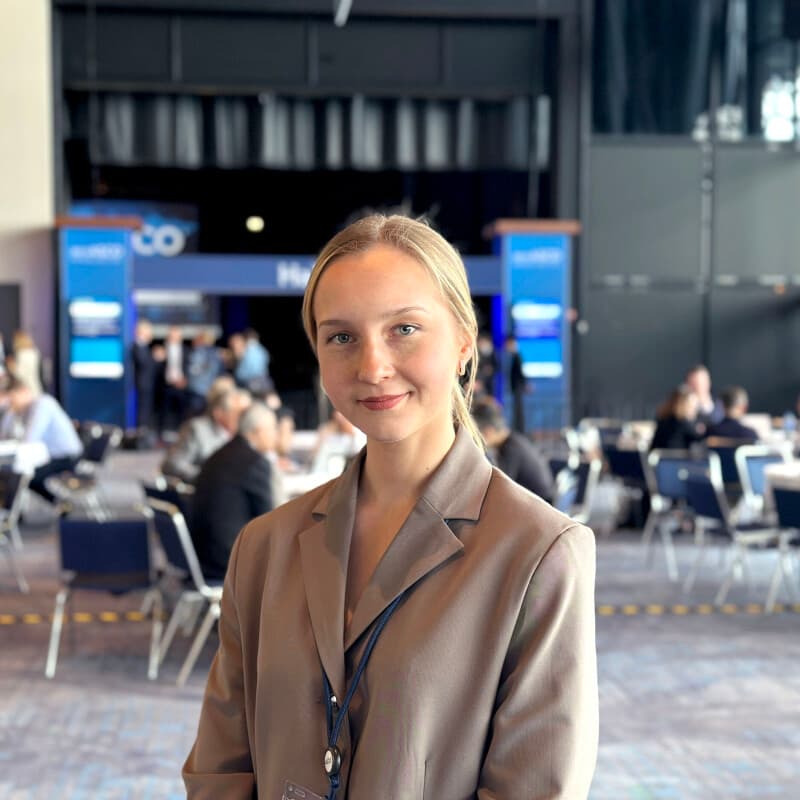 Evgenia TaranovaMD/PhD StudentUniversity of Bergen
Studies the doctor–patient–AI triad: aligning authority, responsibility, and decision-making in clinical AI deployment.
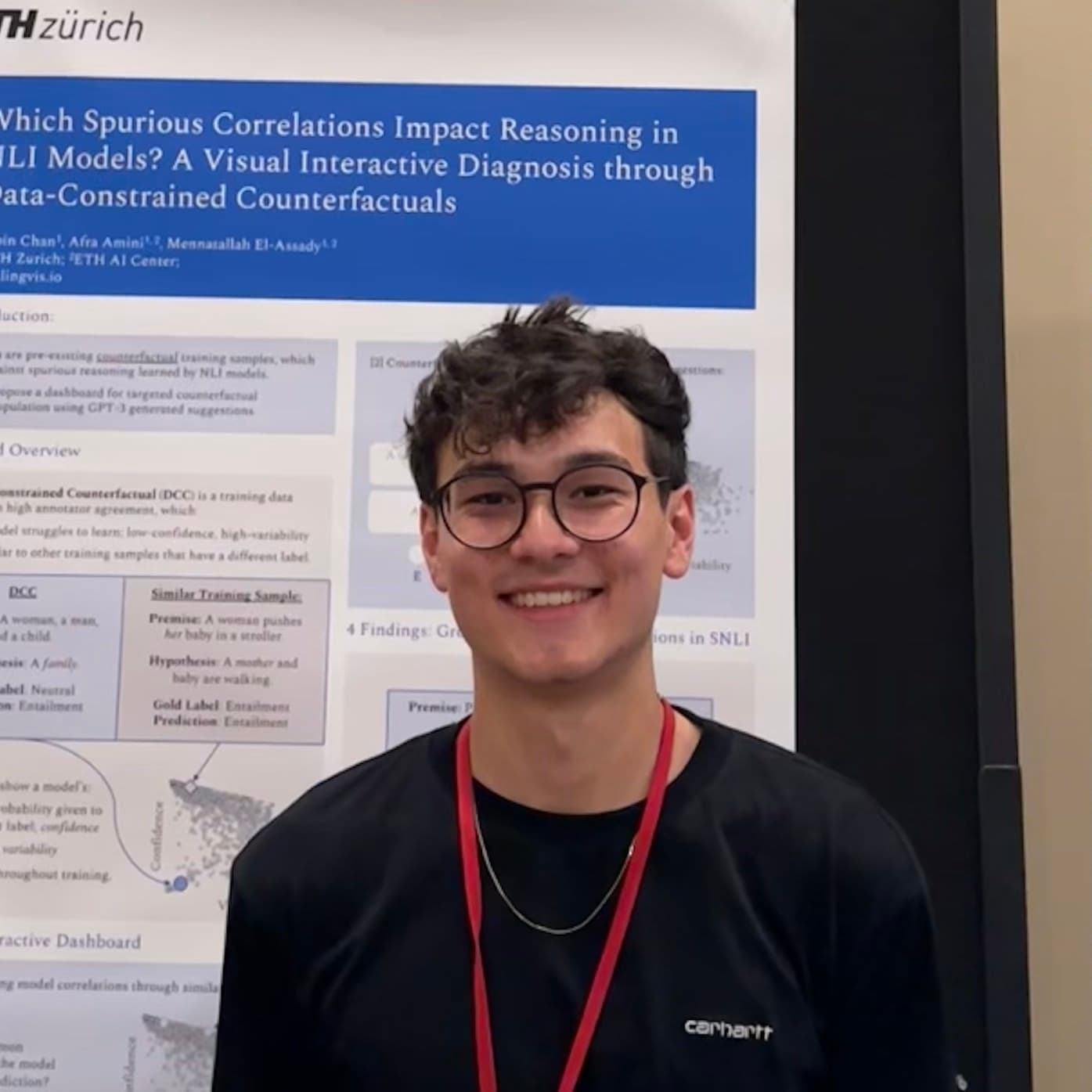 Robin ChanPhD StudentETH Zürich · ML Institute
Bridges probabilistic inference and HCI through inference-time language-model control. Best Paper at CHI 2026.
 Rachel SchuchertDoctoral StudentETH Zürich · SIPLAB
PhD student at the Sensing, Interaction & Perception Lab. Visual & interactive computing with a minor in machine learning.
 Anna NeumannPhD ResearcherRC TRUST · CASG
Examines how AI systems shape sociotechnical structures, with a focus on responsible-AI practices in algorithmic supply chains.
 Janet PauketatResearch FellowSentience Institute
Studies how socio-cultural contexts and mental models of autonomy and sentience shape human reactions to AI.
 Laura SchützIncoming Postdoctoral ResearcherTUM → ETH Zürich
PhD on multisensory interactions in augmented reality for healthcare. Sound-guided surgery, sonification, cognitive load.
Steering committee
Senior advisors who anchor the workshop's intellectual grounding and supervise several committee members.
 April Yi WangAssistant ProfessorETH Zürich · PEACH Lab
Tenure-track Assistant Professor in the Department of Computer Science at ETH Zürich, leading the Programming, Education, and Computer-Human Interaction Lab. Research in human-AI interaction and educational technology. Anchors several of the committee's chatbot-agency and value-alignment studies as Bhada Yun's advisor.
 Mennatallah El-AssadyAssistant ProfessorETH Zürich · IVIA Lab
Assistant Professor in the Department of Computer Science at ETH Zürich, leading the Interactive Visualization and Intelligence Augmentation Lab (IVIA). Research at the intersection of visual analytics, computational linguistics, and explainable AI, with a focus on interactive human-AI collaboration. Anchors the committee's interface and visual-analytics work.
Submit a paper.
We're gathering researchers across medicine, psychology, education, AI safety, design, governance and HCI: anyone studying how people understand AI. If that's your work, we want it in the room.
Submission portal will appear here as soon as the workshop is accepted.
Questions: workshop@mentalmodelsof.ai
← Back to home